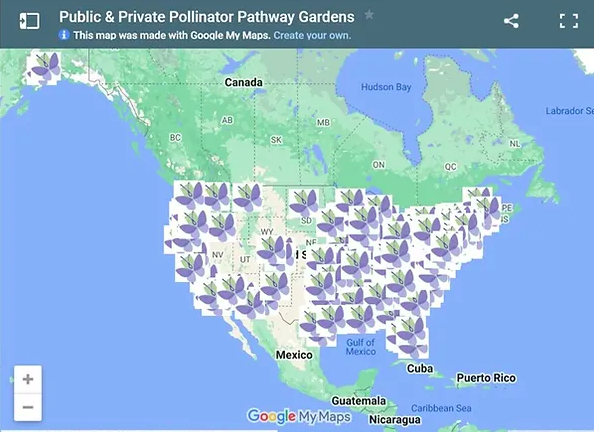
Pollinator Pathway
Irvington


The Irvington Pollinator Pathway Project is a collaboration of the Greater Irvington Land Trust, the Green Policy Task Force, the Friends of the Irvington Library, the O’Hara Nature Center and a wide range of Irvington residents and land owners.
Our mission is to (i) engage and educate our community about the relationship between pollinators and native plants, (ii) promote public awareness about the crucial role that pollinators play in sustaining our environment and supporting our food chain, and (iii) support efforts to preserve and protect both public and private open space throughout our Village.
We are working with a wide range of groups to develop pollinator-friendly gardens throughout the Village that support native plants and promote biodiversity. We have also established a Living Classroom Series, which invites in speakers to address topics of interest for the community.
For further information please contact:
Chet Kerr at chetkerr@gmail.com


The Greater Irvington Land Conservancy Foundation
Project to Create a Swamp Milkweed Meadow
Irvington Woods Park in Irvington, N.Y.
The Greater Irvington Land Conservancy Foundation’s Wet Meadow Project transformed a 0.5-acre area of Irvington Woods Park into a thriving habitat designed to support monarch butterflies and a wide range of pollinators, birds, and other wildlife. Led in partnership with the Irvington Woods Committee, the Village of Irvington, and the O’Hara Nature Center, the project combined ecological restoration with community engagement—removing invasive species, increasing sunlight, and planting over 900 native plants including swamp milkweed, grasses, shrubs, and trees.
Volunteers contributed significant time to clearing and preparing the site, constructing a deer exclosure to protect new plantings, and participating in ongoing planting efforts. Beyond habitat creation, the meadow serves as a living outdoor classroom, supporting hands-on research, student programming, and public education, with tools and monitoring systems in place to study pollinators and wildlife over time. The project demonstrates how community-driven conservation can restore biodiversity while creating meaningful opportunities for learning and stewardship.
Read the Full Report - Wet Meadow Project