Pollinator Pathway
Lexington

Welcome to the Lexington Pollinator Pathway!
There are several organizations and initiatives at work in Lexington to improve habitat for pollinators and to protect and enhance biodiversity in town. Together, these initiatives demonstrate a shared commitment to improving pollinator habitat and protecting and enhancing biodiversity throughout Lexington.


Lexington Living Landscapes
Lexington Living Landscapes was launched in 2020 as a collaboration of the town’s Sustainable Lexington Committee and three nonprofits: the Lexington Climate Action Network, Lexington Field and Garden Club, and Citizens for Lexington Conservation. Our goal is to encourage private landowners and public land managers to adopt more sustainable landscaping practices that protect our health and environment by:
Adapting our home gardens, lawns, and other landscaped spaces to be more wildlife-friendly through planting native plants, controlling invasive species, and tending our gardens in ways that benefit wildlife. This will shift our natural areas from being isolated refuges into hubs within a supportive landscape mosaic.
Reducing or eliminating the use of chemical fertilizers, herbicides, pesticides, and other toxins that threaten the health of our families and the natural world.
Improving Lexington's tree canopy by reducing the loss of existing trees and planting new ones. Trees filter our air and water, keep us cooler in summer, and host a wide variety of wildlife.
We do this with a website, a newsletter, programs (both online and in person), a demonstration garden and demonstration meadow, an annual native plant sale in collaboration with the town’s Conservation Division, and an annual Open Gardens Day.
Want to be on our mailing list? Email us at lexlivingland@gmail.com.
Hastings Park Demonstration Garden
We installed a demonstration garden in Hastings Park, near Lexington Center, in 2023 to (i) educate people about the importance of native plants to pollinators and other wildlife, (ii) showcase native plants that people might want to add to their own gardens, and (iii) create a visually pleasing display of plants that have a succession of bloom times and offer multi-season interest as well. Learn more - Hastings Park
Minuteman Bikeway Demonstration Meadow
In 2021 we began the task of replacing an aggressive stand of knotweed with a pollinator meadow next to the popular Minuteman Bikeway. Year by year we’re seeing progress; the knotweed is far less vigorous, and a variety of perennials we’ve planted (and some that have volunteered) are becoming established. Learn More - Minuteman Bikeway


Citizens for Lexington Conservation (CLC)
Citizens for Lexington Conservation has been engaged in supporting the conservation of open space as a public resource in Lexington for over 50 years. CLC advocates on behalf of town-owned conservation land, leads guided walks on these lands, and has a significant role in educating residents about conservation-related topics, such as the value of native plants in our ecosystems. In addition, we work with the Town’s Conservation Department to produce educational signage, and to provide monitoring for restricted parcels in town.
Each season, CLC publishes a newsletter rich with information about upcoming guided walks, invasive removal events, book reviews, historical and current conservation efforts and more.
Interested in getting more involved in local conservation activities? Consider becoming a member!


Lincoln Park & Fields Pocket Forest (Town of Lexington)
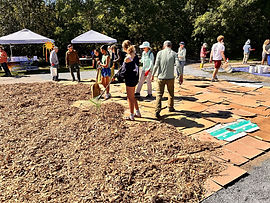
Lexington is testing an innovative planting method called a pocket forest — a small but dense grove of native trees and shrubs designed to grow into a self-sustaining forest in just a few years. Instead of planting a few large trees here and there, a diverse mix of native species are planted close together in prepared soil that will help them grow rapidly to create a biodiversity hotspot! This pilot project captures stormwater, carbon, and pollution, while creating shade, cooling, and providing habitats for birds, bees, and butterflies. The idea is simple but powerful: maximum ecological function per square foot, using low-tech, low-cost methods. Approximately 80 volunteers helped to prepare the site, plant trees, coordinate the event. Some of the trees were provided by a local zero-waste grower, some were donated by local residents from their own yards, both to keep the costs low and the community engagement high. The site itself turned out to be more difficult than anticpated - highly compacted soil - but time will tell what happens next as we watch and learn from this pilot.
Learn more - Pocket Forest